Buffalo National River camping draws visitors who want river access, cliffs, and quiet nights. This guide explains how to plan buffalo national river camping trips, what permits to get, and which sites to choose. It lists gear essentials, reservation tips, and safety rules. It keeps details clear so readers can make fast, practical choices for buffalo national river camping in 2026.
Key Takeaways
- Buffalo National River camping offers scenic river access, limestone cliffs, and abundant wildlife, ideal for anglers, paddlers, and families seeking solitude near major cities.
- Planning your trip involves securing necessary permits for backcountry or float camping and checking river conditions and weather forecasts before arrival.
- Choose from developed campgrounds like Buffalo Point and Ponca, which offer amenities and river views, or backcountry sites that require more preparation and awareness of seasonal closures.
- Reservations are essential during peak seasons and can be made through official park systems, with fees varying by site type and group size.
- Pack essential gear including tents, water filters, life jackets, and a first-aid kit, and be prepared for limited cell service at many camping locations.
- Follow Leave No Trace principles, use designated campfire rings when allowed, and store food properly to minimize wildlife encounters and ensure safety.
Why Camp At Buffalo National River? What Makes It Special
Buffalo National River camping offers clear water, limestone bluffs, and diverse wildlife. The park protects 135 river miles and delivers scenic paddling and hiking options. Visitors choose buffalo national river camping for solitude near major cities and for multi-day float trips. The river supports trout, smallmouth bass, and native plants. Staff and rangers maintain campsites and trails. Anglers, paddlers, and families find sites that match skill and comfort levels for buffalo national river camping. Beyond recreation, many come for photography at sunrise along bluff overlooks, for long ridge-to-river hikes, or to experience dark skies away from urban lights—making the area appealing to both active and more relaxed campers.
When To Go, Weather Considerations, And Permits You’ll Need
Spring and fall provide mild temperatures for buffalo national river camping and are often the most comfortable for hiking and paddling. Summer brings higher water levels and heat that require shade, hydration, and sun protection; expect more crowds and the possibility of afternoon storms. Winter offers quiet access but cold nights that need four-season gear and awareness of icy access roads. Weather on the river can change quickly—check short-term forecasts and high-water advisories before launching. The National Park Service requires permits for many backcountry and float-camping sections; day-use areas generally do not require permits. Permits may be free or fee-based and can include specific rules about group size, camping locations, and seasonal closures for wildlife nesting or road conditions. Confirm permit requirements and seasonal closures with the park before planning your buffalo national river camping trip to avoid surprises on arrival.
Best Campgrounds And Sites Along The River — Overview
Buffalo national river camping includes developed campgrounds and backcountry sites. Campgrounds sit near access points and services; they typically offer parking areas, trail access, and basic facilities such as vault toilets and picnic tables. Backcountry sites sit along riverbanks and require careful planning for water safety, erosion-sensitive areas, and campfire restrictions. Some sections of the river close seasonally for nesting birds, mussel protection, or high water; other stretches remain open year-round when conditions allow. Reservations fill fast for weekend stays and holiday periods—plan at least several weeks ahead for popular developed campgrounds and consider weekday or shoulder-season trips for more solitude. Park maps, ranger stations, and published site lists show legal sites for buffalo national river camping and identify hazard zones and no-camping stretches to help you match your route and skill level with appropriate campsites.
Developed Campgrounds: What To Expect At Buffalo Point, Ponca, And Rustic Sites
Buffalo Point campground offers vault toilets, picnic tables, and river views, and it serves as a good base for short hikes and sunset overlooks. Ponca gives a small store nearby and group sites for larger parties, plus easy river access for curtain-raft or canoe trips. Rustic sites provide primitive parking and limited amenities and are often quieter and more secluded; expect no potable water and bring your own filtration or purification. Each area enforces quiet hours, stay limits, and campsite limits per party—check the specific campground rules before arrival. Campers should bring water filters, extra food, and plan for intermittent or no cell signal at many developed sites. For those seeking backcountry solitude, scout authorized float-camping sites, carry a topo map or GPS, and be prepared for rocky or narrow tent pads near the river. Arrive early to claim walk-up sites during busy months, and be respectful of site boundaries and resource protection measures while buffalo national river camping.
Trip Planning: Reservations, Fees, How To Get There, And Gear Essentials
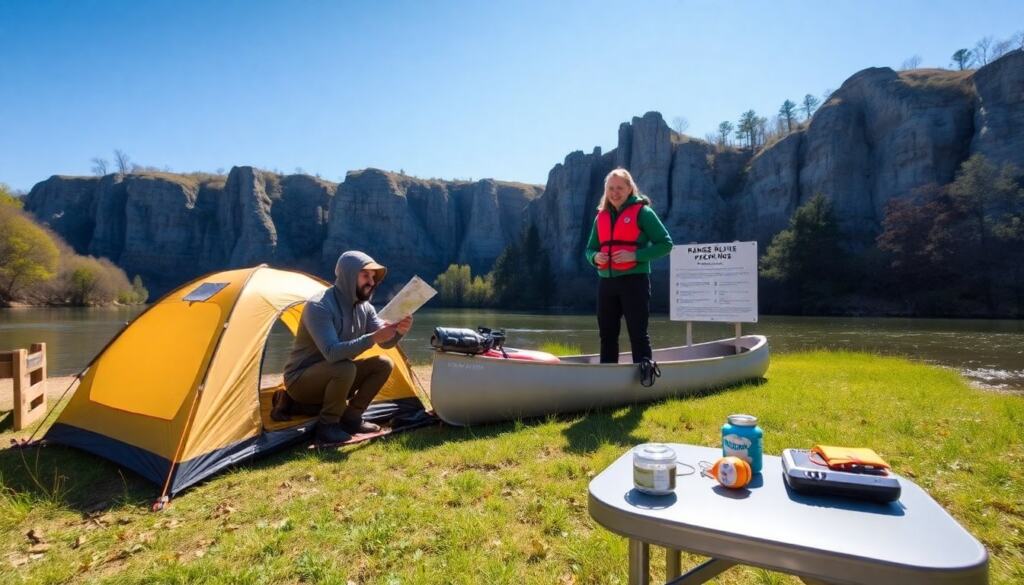
Visitors should reserve sites for high-season buffalo national river camping through the park reservation system or authorized vendors when available; check for group-site requirements if you’re traveling with multiple tents. Fees vary by campground and by group site size; some primitive sites may be free but still require registration. Most access points require a short drive on gravel or county roads—two-wheel-drive vehicles handle many routes in fair weather but high-clearance or four-wheel-drive helps on steeper or rutted approaches. Essential gear includes a reliable tent and sleeping system appropriate for the season, a water filter or purification method, a camp stove and fuel, and a properly fitted life jacket for any river trip. Also pack navigation aids (map, compass, or GPS), extra layers, sun protection, insect repellent, a multi-tool or repair kit, and a well-stocked first-aid kit. For float trips, include dry bags, secure tie-downs for gear on boats, and spare paddles. Plan food and water quantities for possible delays and carry a backup plan for shelter in case river conditions force an unplanned exit.
Safety, Leave No Trace, Wildlife Awareness, And Campfire Rules
Visitors should follow Leave No Trace and pack out trash after buffalo national river camping. Use established campsites and trails to reduce erosion and avoid trampling sensitive vegetation. Campfires are allowed only in designated rings where local rules permit; during dry conditions rangers may implement burn bans—bring a camp stove as a backup. Keep food stored in vehicles when available or use approved hanging methods well away from sleeping areas to reduce wildlife encounters; never feed or approach wildlife. Be prepared for river hazards—wear life jackets on all river trips, scout unfamiliar rapids or riffles from shore when possible, and be cautious around undercut banks and swift currents. Carry a charged communication device and a paper map or downloaded offline maps since cell coverage is limited in many areas. In case of injury, provide first aid and contact park dispatch if service exists, or use planned exit routes to reach a staffed ranger station. Follow park instructions for reporting hazards or illegal activity to help protect resources and other visitors enjoying buffalo national river camping.