| Situation | Supported detail | Planning use |
|---|---|---|
| Black bass outlook | MDC rates black bass fishing as excellent for 2026 | Make bass the default target when your trip date is fixed. |
| Largemouth size | Good numbers in the 15-18 inch range in fall 2025 electrofishing | Set expectations around fish in this range rather than giants. |
| Spotted bass | Abundant, mostly 11-14 inches; 3% exceeded 15 inches in fall 2025 | Good for steady action, a poor choice if you want a trophy. |
| Walleye | Typically move up the river arms to spawn around the first part of March | Plan an early-spring trip to the river arms. |
| Crappie | Best in spring and fall; 10-inch legal-size limit | Measure fish against the limit before you keep them. |
| Bluegill | Best from late May through early July | Early summer suits a relaxed trip with light tackle. |
| Paddlefish | Legal harvest March 15 through April 30 | A narrow window, so decide early whether it matters to you. |
| Summer bass depth | Effective in the 10-25 foot range or deeper, depending on the thermocline | Switch to deeper presentations once the water warms. |
Figures above come from the Missouri Department of Conservation’s Table Rock Lake fishing prospects page.
Table Rock Lake fishing is best planned around species and season: bass pay off most of the year, walleye and paddlefish are early-spring targets, and crappie peak in spring and fall. Check current MDC length limits before keeping fish.
If you are building a wider trip, pair this with our roundup of things to do outdoors in the Ozarks, then use the sections below to match species, timing and access to your dates.
Choosing a target species
Your choice of species decides almost everything else: the month, the depth, the tackle and the legal size you need to meet. The lake is a 43,100-acre reservoir in southwest Missouri that a local tackle guide describes as having great bass fishing year-round. MDC’s survey-based outlook adds detail on the other fish worth planning around.
- Largemouth bass: fall 2025 electrofishing surveys found good numbers in the 15-18 inch range, which makes them the most reliable “good fish” target on the lake.
- Spotted bass: abundant but mostly 11-14 inches, with just 3% of those captured in fall 2025 exceeding 15 inches. Treat them as the action fish and expect size from largemouth instead.
- Crappie: in the James River Arm, fall 2025 netting found 40% of black crappie and 36% of white crappie over 10 inches, so keeper-size fish are present.
- Walleye: a March 2025 survey in the James River Arm found 100% of walleye over 15 inches and 56% over 20 inches. That is a small-area snapshot, but it points to quality fish in the river arms at spawning time.
- Paddlefish: 84% of those captured in 2025 netting exceeded the 34-inch minimum length limit.
- Bluegill: best caught from late May through early July, which makes them the easy pick for beginners and families.
Once you know the species, the calendar narrows your options further.
A season-by-season planner
The lake rewards anglers who match the target to the window MDC identifies rather than fishing the same way all year. Use the stretches below as a sequence; the sections after it explain how to fish each one.
- Early March: walleye typically move up the river arms to spawn around the first part of March, so this is the time to be on the arms rather than the main lake.
- March and April: the prespawn and spawn stages are the prime bass window, according to the local tackle guide. It is an older guide, so treat it as a seasonal pattern and not a guarantee.
- March 15 through April 30: the legal paddlefish harvest period in Missouri, with a limit of two per day.
- Spring and fall: the best crappie seasons. MDC’s outlook points to crappie reaching the 10-inch legal-size limit in fall 2026.
- Late May through early July: bluegill are at their best.
- Summer: bass move into deeper water, and MDC lists jigs, spoons and drop-shot rigs as effective in the 10-25 foot range.
Anyone who can only pick one window should choose by species: early spring for walleye and bass, late spring or fall for crappie, early summer for bluegill. The MDC outlook gives no month-level detail beyond these windows, so do not assume other months are slow. The same page rates black bass fishing as excellent for 2026 overall.
Bass lures and depth choices
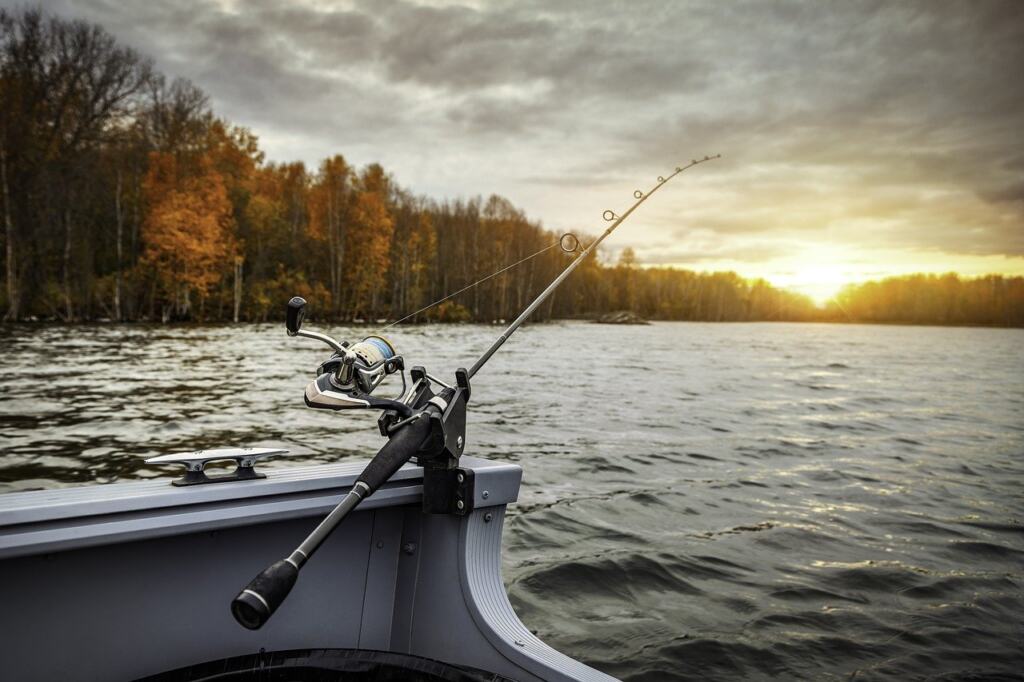
For bass, the main decision in warm months is depth, not lure brand. MDC says jigs, spoons and drop-shot rigs are effective during summer in the 10-25 foot range, and fish may sit deeper depending on the thermocline. That means a shallow-only approach will often miss summer fish.
Spotted bass over deep water
Spotted bass are commonly found suspended over deep water, following schools of baitfish. A suspended fish will not be on the bottom structure you are working, so watch your electronics for baitfish and adjust the depth of a spoon or drop-shot to match. If you cannot find bait, move.
Spring bass
In March and April the local guide’s prespawn and spawn timing matters more than a specific lure. Spring is the time to fish shallower structure and keep the larger largemouth in mind, since MDC found good numbers in the 15-18 inch range.
Crappie, walleye and brush-pile structure
Crappie are the easiest species to fish with simple gear. MDC says small plastic jigs and minnows are very effective around woody structure, with spring and fall the best seasons. Because the fish hold on wood, the question is where the wood is.
MDC has answered that with habitat work: over 1,400 fish habitat structures were placed in the lake from 2007 to 2013. From November 2022 to March 2024, 751 of the brush pile structures were rebuilt or newly created. Fishing a known pile with a jig or minnow suits anglers who would rather work a defined target than search open water.
Walleye are a different job. Their spawning movement up the river arms in early March concentrates them, so that is when to target them there. Given the James River Arm survey results, it is the arm to consider first.
Length limits and harvest windows
Limits decide what you can keep, so check them before you plan a meal around the catch. These are the values MDC’s Table Rock outlook supports.
- Crappie: the legal-size limit is 10 inches, so measure every fish that looks borderline.
- Spotted bass: the minimum length limit is planned to be reduced to 12 inches in 2026. Confirm the current rule before you keep any, since the change may affect what you can take.
- Paddlefish: legal harvest runs from March 15 through April 30, at two per day, and 34 inches is the minimum length limit.
Creel and length limits for other species, including largemouth bass and walleye, should be confirmed in current Missouri regulations or with MDC’s Southwest Region before you go.
Boat access and ramps
Access is more flexible than the shoreline suggests. A local tackle guide notes plenty of U.S. Army Corps of Engineers launch ramps in various parts of the lake, and several full-service marinas where you can rent a fishing boat. A fishing-map listing for the lake also shows a public boat launch and a toilet, but no boat dock.
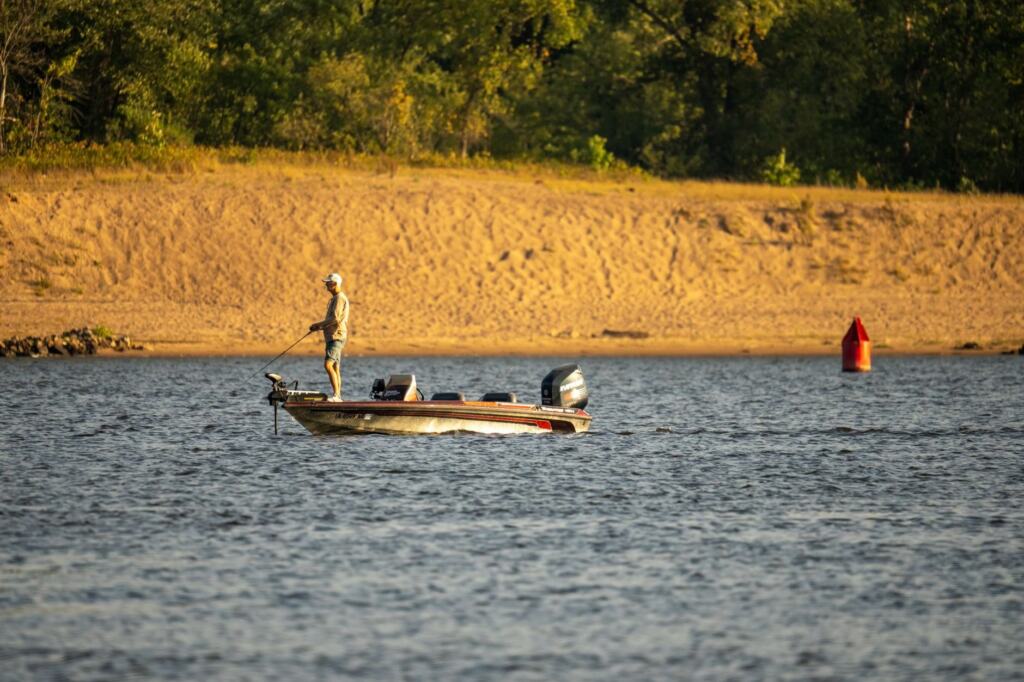
The practical choice is to pick the ramp closest to the arm you want to fish, since a long run to the river arms cuts into the narrow early-spring windows. If you do not trailer a boat, see our guide to Table Rock Lake Boat Rentals: The Complete Guide To Finding, Booking, And Enjoying Your Perfect Day On The Water (2026) – Ozarkssentinel. For a multi-day trip, our notes on camping in the ozarks cover where to stay close to the water.
Frequently asked questions
Do I need a fishing license for Table Rock Lake?
Yes. Anglers must hold a fishing license for the state in which they are fishing, and there is no reciprocal agreement between Missouri and Arkansas, according to a fishing-map listing for the lake. Buy the license for the state whose water you will be on.
Is there a carry-in launch?
The same listing shows a boat launch but no carry-in launch, so paddlers and kayak anglers should plan a launch that suits their craft.
How do I find the brush piles?
Anglers can use the MDC website or download the free MO Fishing App to find the locations of habitat structures, as described on the MDC prospects page.
Who can answer local fishing questions?
MDC’s Southwest Region information line is 417-895-6880, listed on the Table Rock Lake fishing prospects page.