The list of things to do in Hot Springs, Arkansas starts with bathhouses, trails, and lake activities. Visitors find hot springs, historic sites, and outdoor options close together. This guide shows practical choices for a short trip or a longer stay. It helps visitors pick spas, hikes, and family activities that fit time and budget. Use the sections below to plan a morning wandering Bathhouse Row, an afternoon soak, an active hike, or an evening on the lake.
Key Takeaways
- Hot Springs, Arkansas features Bathhouse Row with historic bathhouses and a National Park Service Visitor Center rich in cultural exhibits.
- Visitors can enjoy soaking in thermal springs at both preserved bathhouses and modern spas offering various treatments and mineral baths.
- Hot Springs National Park provides diverse hiking and biking trails along with picnic areas and scenic overlooks suitable for all seasons.
- Lake Hamilton offers numerous water activities including boating, fishing, and paddleboarding, complemented by lakeside dining and lively evening entertainment.
- Planning visits to spas, trails, and lake activities can fit various budgets and trip lengths for an enjoyable Hot Springs experience.
Visit Bathhouse Row And The National Park Service Visitor Center
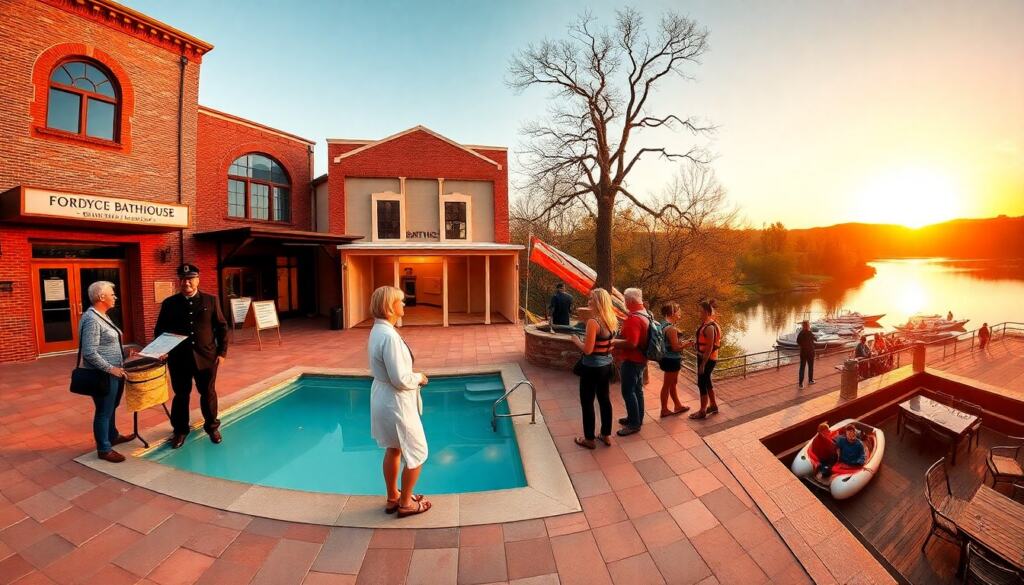
Bathhouse Row sits on Central Avenue. It offers preserved bathhouses, museums, and shops. The National Park Service visitor center sits in the Fordyce Bathhouse. It greets visitors, explains the springs, and shows historical exhibits. Rangers answer questions and hand out maps. Visitors learn about the springs, local culture, and the 19th-century spa boom. They take photos of historic architecture and read interpretive panels. They time the visit early to avoid crowds and to find parking near the bathhouses.
Allow at least an hour to tour the visitor center and walk the length of Bathhouse Row; add more time if you plan to visit museums inside individual bathhouses or attend a ranger talk. The block-long promenade is pedestrian-friendly, with benches and interpretive markers that make it easy to appreciate the architecture and community history even without a guide. For accessibility, note that many public areas are level or ramped, though some historic interiors can have narrow doorways or steps. If you’re visiting with kids, point out the original tilework and historic signage to make the walk engaging for all ages.
Soak At The Historic Thermal Springs And Modern Spas
The thermal springs feed both historic bathhouses and modern spas. Visitors soak in mineral baths or take private spa treatments. The water arrives at a steady temperature and contains minerals that many find soothing. Spas offer massages, body wraps, and thermal pools. Historic bathhouses keep original tile and woodwork, and modern spas add private suites and contemporary services. Visitors choose public or private options depending on comfort and budget.
When planning a soak, consider time of day and length — a 30- to 60-minute mineral bath can be very relaxing, and many visitors combine a soak with a massage or other treatment for a half-day experience. Typical preparations include bringing a swimsuit, water bottle, and sandals; spas usually provide towels and robes. If you prefer a quieter experience, ask about private suites or off-peak weekday appointments. For those on a budget, some bathhouses and community facilities offer shorter soak sessions or shared pools. Compare treatment menus and call ahead to confirm availability and any age or health restrictions.
Hike, Bike, And Picnic In Hot Springs National Park
Hot Springs National Park offers trails, overlooks, and picnic spots. Visitors hike short loops or longer ridge routes. The park balances history and nature with paved promenades near the city and dirt trails higher on the hills. They bring water, sun protection, and a simple map. The park provides interpretive signs that explain geology and local flora. Visitors find shade for summer picnics and windy viewpoints for cooler days.
Trail options suit a range of abilities: paved scenic loops near downtown are ideal for families and casual walkers, while steeper ridge trails reward hikers with panoramic views and quieter backcountry. Cyclists can use certain park roads and designated trails, but check signage and seasonal restrictions before setting out. Pack a picnic lunch to enjoy at one of the park’s designated picnic areas or at a scenic overlook, and practice Leave No Trace principles to keep the park clean. For safety, wear sturdy shoes, carry water, and be mindful of changing weather on exposed ridgelines; cell service can be spotty in some areas so download a map or pick up a paper trail map at the visitor center.
Lake Hamilton, Water Sports, And Evening Entertainment
Lake Hamilton provides boating, fishing, and paddleboarding. Visitors rent kayaks, pontoon boats, and jet skis at local marinas. They follow safety rules and wear life jackets. The lake has sunset views that visitors photograph. Nearby restaurants serve local fish and barbecue. Evening entertainment includes live music, theaters, and casual bars. Families find amusement centers and lakeside parks. Visitors check event calendars for summer festivals and weekend concerts.
Plan lake time around weather and light — late afternoon and early evening are popular for calmer water and dramatic sunsets. If you plan to rent a boat, reserve in advance during peak season and confirm what safety equipment is included. Anglers should check local regulations and seasonal species patterns before fishing. After a day on the water, explore lakeside dining options for casual to sit-down meals, then catch an evening show or live music performance at a local venue. For a family night out, look for arcades, mini-golf, or lakeside parks where kids can play while adults enjoy the sunset.