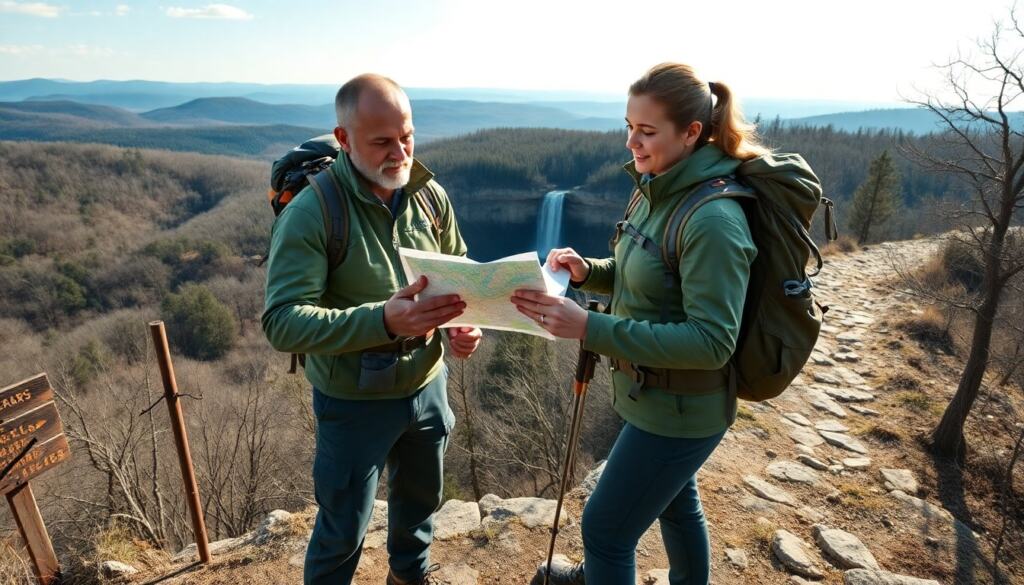
Hiking in Arkansas draws outdoor fans to forests, bluffs, and waterfalls. The state offers trails for beginners and experts. This guide lists top regions, day hikes, multi-day routes, gear needs, and safety tips. It aims to help readers plan trips in 2026 with clear, usable advice. Below you’ll find region-by-region context, specific route descriptions and expectations, practical packing lists and clothing guidance for Arkansas’s humid and variable climate, and thorough safety and permitting information to make trips more successful and comfortable.
Key Takeaways
- Hiking in Arkansas offers diverse terrain across the Ozarks, Ouachitas, and Boston Mountains, suitable for both beginners and experts.
- Top day hikes include Hawksbill Crag and Cedar Falls Trail, while multi-day routes like the Ozark Highlands Trail provide extensive backcountry options.
- Proper gear for hiking in Arkansas includes breathable clothing, sturdy trail shoes, rain protection, and water filtration to handle variable weather and wet conditions.
- Safety preparations involve checking weather forecasts, carrying extra water, avoiding wildlife contact, and knowing emergency contacts and trail locations.
- Hikers should comply with permit regulations, parking rules, and seasonal restrictions to ensure a smooth and legal hiking experience.
- Following Leave No Trace principles and trail etiquette preserves Arkansas’s natural beauty and maintains accessibility for future visitors.
Why Arkansas Is A Hiker’s Dream — Regions, Landscapes, And Best Seasons
Arkansas offers varied terrain for hiking in Arkansas across the Ozarks and the Ouachitas. The Ozarks feature steep ridges, clear springs, and karst topography; expect bluffs, box canyons, and limestone features that create dramatic overlooks and hidden caves. The Ouachitas provide long, rounded peaks and pine and hardwood forests with ridge-top vistas and sandstone outcrops that hold up well in wet weather. The Boston Mountains—part of the Ozark Plateau—give steeper climbs and numerous waterfalls, often reached via switchbacked trails and creek crossings.
Seasons change trail character significantly. Spring brings wildflowers, swollen streams, and prime waterfall flows but can mean muddy approaches and higher insect activity. Summer delivers hot and humid days; plan early morning starts, hike higher elevations to find cooler air, and be prepared for afternoon thunderstorms. Fall is often the most pleasant for many hikers: cooler temperatures, reduced bugs, and vivid foliage on maples and oaks. Winter offers quieter trails and clear air for long-distance views, but some ridge-top trails can be slick with ice after freezes. Match timing to your goals—waterfall viewing, wildflowers, or cooler hiking—and check recent trail reports for seasonal closures or high water.
Top Day Hikes To Experience — Trails, Difficulty, And What To Expect
Hiking in Arkansas rewards day hikers with diverse options suitable for families, photographers, and serious scramblers. Popular classic hikes include Hawksbill Crag (Whitaker Point) — a relatively short but steep approach to a dramatic sandstone ledge popular at sunrise and sunset; expect uneven footing and the possibility of queues at the viewpoint on busy days. Petit Jean State Park’s Cedar Falls Trail is a moderate loop that combines paved sections, staircases, and a dense forest approach to a scenic waterfall—good for mixed-ability groups and photographers. Richland Creek Wilderness offers longer loops with multiple creek crossings and rugged, less-developed backcountry terrain for hikers seeking solitude.
Less crowded or easier options include Leatherwood Lake Trail, which offers gentler grades and water views, and overlooks along the Mount Magazine area for panoramic views without technical scrambling. For each day hike consider: true trail distance vs. your map, cumulative elevation gain, likely footing (rock, exposed roots, mud), availability of parking and restroom facilities, and typical crowd levels. Bring a printed map or a downloaded offline map: cell service is unreliable on many ridges and in narrow hollows. If hiking with dogs or children, factor in shade, water availability, and turnaround options to avoid overly long days.
Best Multi-Day Routes And Overnight Camping Options
Hiking in Arkansas supports multi-day trips on established routes and in designated backcountry areas. The Ozark Highlands Trail is the state’s premier long-distance route, offering sections of varied difficulty and numerous primitive campsites and springs—suitable for extended thru-hikes broken into day segments. The Ouachita National Recreation Trail traverses a long east–west corridor with ridge-top campsites and several primitive shelters; resupply options are limited, so plan food caches or short road shuttles where needed. Buffalo National River country permits dispersed camping in many places but enforces rules in sensitive zones and along high-use river corridors.
When planning overnight trips: research water sources and seasonal reliability—some springs and creeks run low in late summer—and carry an appropriate water-treatment system. Use durable, lightweight shelters and follow hard-sided stove or fire restrictions where posted; many sensitive campsites have fire bans during dry spells. Reserve drive-in campgrounds at state parks well in advance for holiday weekends; backcountry permits are required in some wilderness or managed recreation areas. Leave an itinerary with a trusted contact and include expected route, exit points, and planned checkpoints so rescuers can narrow search areas if necessary.
Essential Gear, Footwear, And Trail-Ready Clothing For Arkansas Conditions
Hiking in Arkansas requires gear matched to humidity, heat, wet crossings, and variable trail surface. Footwear: choose sturdy trail shoes or boots with a lugged sole and good water-shedding upper—rocky, wet roots and creek crossings are common. For longer treks, consider mid-height boots for ankle support; for short day hikes a breathable trail runner can be more comfortable. Clothing: layer with moisture-wicking base layers, a light insulating mid-layer for cool mornings, and a waterproof/breathable shell for sudden storms. Quick-dry pants and convertible hiking pants help with wet creek crossings and summer heat.
Pack essentials tailored to Arkansas terrain: a reliable water filter or chemical treatment (sized for your group), 1–2 liters of carry capacity per person for typical day hikes (more in summer), a headlamp with spare batteries, a small first-aid kit including blister care, and a multi-tool or repair kit for gear. Trekking poles are valuable for stream crossings and steep descents. Include a lightweight emergency bivy or space blanket, waterproof stuff sacks or dry bags for electronics, and sunscreen and insect repellent—ticks and chiggers are active in warm months. For overnight trips add a camp stove (where fires aren’t allowed), a sit pad, and a lightweight shelter rated for the temperatures you expect. Balance weight with redundancy: water treatment and navigation backups are more important than multiple clothing items.
Safety, Weather, And Wildlife: How To Prepare For Ozark And Ouachita Trails
Hiking in Arkansas exposes hikers to changing weather and local wildlife; preparation reduces risk and improves enjoyment. Weather can shift quickly—especially on exposed ridges—so check forecasts the morning of your hike and watch for building clouds. Summer thunderstorms often produce heavy rain and lightning; avoid exposed summits during storms and plan to descend to lower, forested terrain if lightning approaches. Heat and humidity increase dehydration risk: carry extra water, break frequently in shade, and know signs of heat exhaustion and heat stroke. In winter, be prepared for icy sections and shorter daylight hours.
Wildlife: leave wildlife unmolested and store food securely—bears are uncommon in Arkansas but nuisance animals such as raccoons and rodents are present in developed sites. Snakes native to Arkansas include several nonvenomous species and venomous species such as copperheads and rattlesnakes; stay on established trails when possible, step carefully around logs and rock outcrops, and avoid reaching into unseen crevices. If you encounter a snake, give it space and move away slowly. For serious injuries, know the nearest trailhead access and emergency numbers for the county where you are hiking; carry a whistle and a personal locator (PLB) or satellite messenger if you’ll be far from roads. Practice basic wilderness first aid for sprains, blisters, and snakebites—keep a small, specific kit and learn how to use it.
Permits, Regulations, And Parking: Rules To Know Before You Go
Hikers learn permit rules before hiking in Arkansas to avoid fines and to protect sensitive areas. Many state parks charge vehicle entry or day-use fees; wilderness and designated recreation areas may limit group size, restrict camping locations, or require a free permit for overnight stays. Areas like the Buffalo National River and certain wilderness tracts have seasonal or site-specific rules for river camps and shoreline camping. Trailheads often have posted rules about parking duration—avoid blocking private driveways or farm access roads, and use designated lots to prevent towing or access problems for nearby residents.
For longer trips check whether trailhead parking requires permits or if shuttling services are recommended. Always obey posted fire regulations and burning restrictions during dry spells. During hunting seasons wear blaze orange if hiking in multi-use areas and be aware of local hunting calendars. When in doubt, contact the managing agency—state park offices, forest district ranger stations, or the National Park Service—for the latest permit, reservation, and parking details before you go.
Leave No Trace And Trail Etiquette Specific To Arkansas Hikes
Hikers follow Leave No Trace principles on trails used for hiking in Arkansas. Pack out all trash, including food scraps and biodegradable items when facilities are not available. Bury human waste appropriately where allowed—six to eight inches deep and at least 200 feet from water—or use provided latrines at developed sites. Camp at established sites and avoid widening trails or creating new tracks that accelerate erosion on sandstone slabs and in fragile bluff-top areas.
Trail etiquette: yield appropriately—downhill hikers typically yield to uphill hikers, and hikers should step aside at designated pullouts to allow faster users to pass. Keep dogs under control; leash laws vary by location but loose dogs can stress wildlife and other hikers. Minimize group size on narrow trails to reduce impact, and use stoves instead of open ground fires where rules or local conditions dictate. Respect cultural sites and marked closures, and report significant trail damage or safety hazards to land managers so maintenance can be prioritized. Small, consistent acts of stewardship help preserve Arkansas trails for other hikers and the next generation.