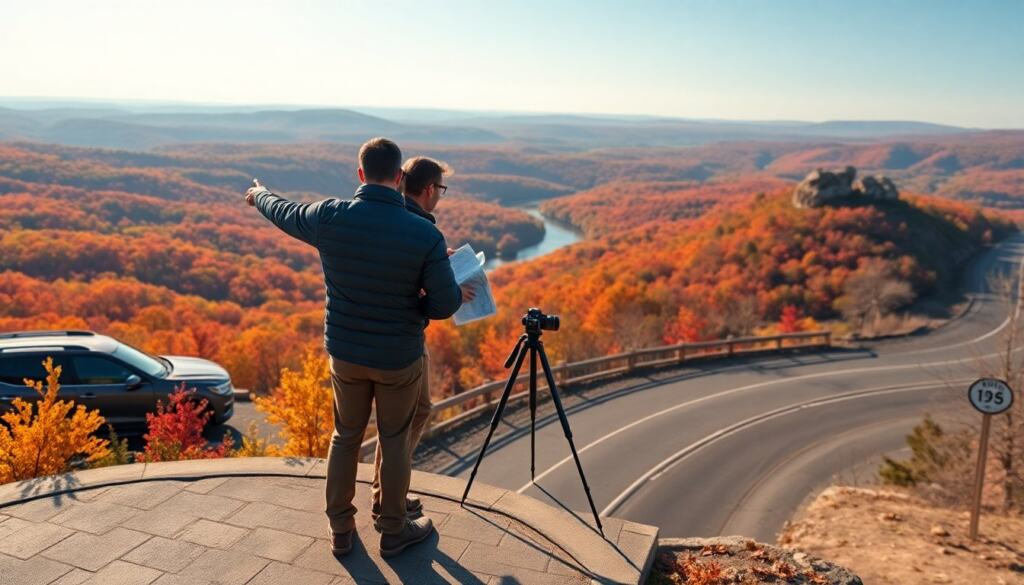
Ozark Mountains fall foliage draws visitors each year. The guide shows when colors peak, where to drive, and what to plan. It uses region and elevation to set expectations. It helps visitors pick dates and routes. It keeps advice clear so visitors can book travel and pack correctly.
Key Takeaways
- Ozark Mountains fall foliage peaks earlier at higher elevations, typically from late September to mid-October in northern Arkansas and mid-October to early November in southern Missouri.
- Scenic drives like the Pig Trail, Highway 65, and Highway 7 offer spectacular views of fall colors along ridges and river valleys.
- Visitors should prepare for variable weather by packing layers, rain gear, and sturdy shoes to navigate slick roads and trails safely.
- Popular hiking spots such as Hawksbill Crag, Lost Valley Trail, and Mount Magazine Signal Hill Trail provide accessible opportunities to experience vibrant fall foliage.
- To avoid crowds and ensure accommodations, book campgrounds and cabins four to six weeks in advance and consider midweek visits for quieter experiences.
- Limited cell service and rural conditions mean carrying paper or offline maps, filling fuel tanks before long drives, and bringing extra water and snacks is essential.
When To See Peak Colors: Timing By Region And Elevation
Fall color in the Ozark Mountains follows elevation and latitude. Peak color tends to appear first on higher ridges and last in low river valleys. In northern Arkansas, peak color often arrives from late September to mid-October. In southern Missouri, peak color often runs from mid-October to early November. Visitors can expect a roughly two-to-three week shift between ridge tops and valley floors.
Weather controls the timing. A warm, wet spring can boost leaf health and push color to normal dates. A dry summer can dull color and shorten peak. Early frost can end color quickly. Visitors should watch local forecasts and recent temperature trends.
Elevation matters. Areas above 1,000 feet show color earlier than areas below 500 feet. For example, Caney Mountain and the Boston Mountains tend to peak before valleys along the White River. Visitors who want early color should head to higher state parks and scenic overlooks. Those who want later color should plan for riverside drives and lower-elevation loops.
Top Scenic Drives, Lookouts, And Photo Spots
The Ozark Mountains fall foliage rewards drivers with many short scenic roads. The Pig Trail (Arkansas Highway 23) offers steep curves and immediate views. The route climbs from the Arkansas River valley to forested ridges and often shows peak color in mid-October. Highway 65 through the Buffalo River area offers long views of hollows and ridge lines. Highway 7 through the Ouachita and Boston Mountains provides continuous overlooks and pullouts.
Key lookouts give wide-angle views. Hawksbill Crag offers a classic photo foreground. Buffalo National River overlooks at Steel Creek and Kyles Landing provide framed river views. The top of Mount Magazine gives broad plateau views and early color on exposed ridges.
Photographers should plan light and composition. The best light comes two hours after sunrise and two hours before sunset. Visitors should use a low ISO and a small aperture for sharp landscapes. A polarizing filter reduces glare and deepens blue sky. Visitors should also scout pullouts for foreground elements like stones, fences, and branches to add depth.
Practical Tips For Visiting The Ozarks In Fall: Weather, Crowds, And Transportation
Visitors should prepare for rapid weather change. Mornings can start in the 30s and afternoons can reach the 60s. They should pack layers, rain gear, and sturdy shoes. Roads can get slick with wet leaves and light rain. Drivers should reduce speed on curves and allow extra braking distance.
Crowds concentrate on weekend dates during peak color. Midweek visits offer quieter trails and easier parking. Campgrounds fill fast in October. Visitors should reserve campsites and cabin stays at least four to six weeks ahead for peak weeks. They should also arrive early at popular trailheads to claim parking.
Transportation options vary. Personal cars offer the most flexibility on scenic drives. Shuttle services operate for some river access points on weekends. Visitors who prefer to avoid driving can find guided tour operators in Fayetteville and Eureka Springs. Those operators run small-group tours that focus on photo stops, short walks, and local history.
Local services remain limited in some rural areas. Visitors should carry a paper map or offline maps on a phone. Cell service can be intermittent along ridges and in narrow valleys. Visitors should fill fuel tanks before long drives and carry extra water and snacks.
Recommended Trails And Short Hikes For Fall Views
Short hikes reward visitors with immediate color without long effort. Hawksbill Crag delivers a three-mile round-trip hike with a dramatic rock overhang. The trail climbs steadily and opens to views above the forest canopy. The Lost Valley Trail at Buffalo National River provides a two-mile loop with waterfalls and cliff-side color. The trail stays mostly level and suits families.
The Mount Magazine Signal Hill Trail gives a one-mile loop to the highest point in Arkansas. The trail offers panoramic viewpoints and early ridge-top color. The Ozark Highlands Trail has multiple short sections that give big views without a full thru-hike. Visitors can select a one-to-four mile segment for a quick forest walk.
Trail choice should match fitness and daylight. Leaves slow footing and hide roots and rocks. Visitors should use trekking poles for balance on steep or wet sections. They should wear layered clothing and carry a small daypack with water, snacks, and a first-aid kit. If they plan sunrise or sunset hikes, they should bring a headlamp and check park rules for access times.