Table Rock Lake camping draws many visitors each season. The guide names top sites, packing essentials, and safety advice. It helps campers pick between RV, tent, and boat-in camping. It lists activities, permit needs, and local resources. The introduction aims to make planning faster and clearer. It keeps focus on practical steps and decisions for a safe, fun trip to Table Rock Lake camping.
Key Takeaways
- Table Rock Lake camping offers diverse options including RV, tent, and boat-in sites to match comfort, mobility, and access preferences.
- Popular campgrounds like Table Rock State Park and private resorts provide amenities such as showers, hookups, and nearby activities, while quieter Corps of Engineers sites offer lakeside seclusion.
- Proper packing for Table Rock Lake camping includes water filtration, sun protection, layered clothing, and safety gear like fire extinguishers and whistles to ensure comfort and security.
- Campers should secure permits, follow local rules for fishing, boating, and fires, and reserve campsites early, especially during holiday weekends.
- Engage in popular activities like fishing for bass and crappie, kayaking, and hiking, while utilizing resources in nearby towns for supplies and medical assistance.
Best Campgrounds And Lakeside Sites Around Table Rock Lake
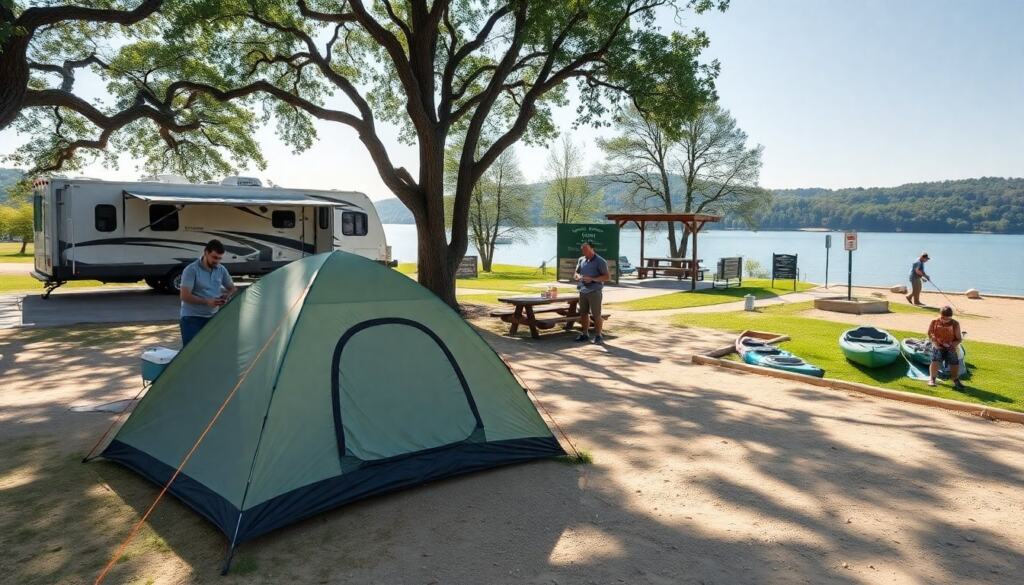
The guide lists campgrounds at Table Rock Lake that suit varied needs. State parks such as Table Rock State Park offer drive-in campsites, showers, and nearby hiking. Private resorts near Kimberling City add hookups, camp stores, and boat ramps. For quieter sites, they find small Corps of Engineers areas with lakeside views and short walks to water. Popular spots fill fast on holiday weekends, so campers reserve early. If campers want fishing access, they choose sites close to boat ramps or coves. If they seek shade, they pick oak-lined loops. For family stays, they choose sites with restrooms and playgrounds.
Beyond the main parks, consider smaller loops and walk-in sites for more privacy; these often have limited vehicle access but give better evening views of the lake. When evaluating a site, look for terrain that drains well after rain, proximity to potable water and vault toilets, and whether the campground enforces quiet hours and generator restrictions. Seasonal considerations matter: spring brings higher flows and cooler evenings, summer brings peak visitor numbers and warmer waters, and fall offers calmer conditions and fewer crowds.
How To Choose Between RV, Tent, And Boat-In Camping
Campers weigh comfort, mobility, and access when they pick a camping style at Table Rock Lake camping. RV camping gives shelter, power, and kitchen space. Tent camping gives closeness to nature and lower cost. Boat-in camping gives solitude and direct water access but needs a seaworthy craft and gear. They match choice to trip length, weather, and group size. For families with small kids they often pick RV or established tent sites. For anglers or paddlers who want remote spots, boat-in camping suits best. They factor in permits and launch rules before finalizing plans.
Decision factors include access to hookups and dump stations for RVs, the effort required to haul gear for tent camping, and the planning needed for a boat-in trip (fuel, secure storage, and waterproofing). Consider noise levels — campgrounds near boat ramps and marinas tend to be busier — and whether you need cell service for work or emergencies. If traveling with pets, check campground pet policies; some lakeside spots permit dogs but with leash rules. Finally, match your sleep system to expected nightly temperatures and wind exposure at the chosen site.
RV And Tent Practical Tips
Campers check campground rules for RV length limits, hookup types, and quiet hours. They level rigs and secure sewer and water lines. They place wheel chocks and test brakes. For tent camping, they choose level ground, clear debris, and set a footprint under the tent. They orient the tent door away from prevailing wind. They bring layered bedding for cool nights and shade tarps for hot afternoons. They pack a compact stove, headlamps, and extra stakes. They keep food in sealed containers and store it in vehicles when lights go out.
Practical campsite setup also includes arranging a safe cooking area downwind from sleeping spaces, keeping a 10–15 foot radius clear of flammable materials around any fire pit, and storing fuel and propane in ventilated areas away from flames. Bring spare batteries and a portable power bank for phones and lights, and pack basic tools — multitool, duct tape, spare cordage — for quick repairs. Follow campground rules for generator hours and quiet times, and practice Leave No Trace: pack out trash, bury only appropriate biodegradable waste where allowed, and use provided restroom facilities.
Packing, Safety, And Camp Setup For Table Rock Lake
Packing for Table Rock Lake camping focuses on water, shelter, and first aid. They pack a water filter or extra water jugs. They bring sun protection: hats, SPF, and long sleeves. They include a basic repair kit for tents and RVs. They pack layered clothing for variable lake temperatures. They bring a compact fire extinguisher and a whistle. They mark campsite boundaries with reflective tape for night. They set up camp with an eye on drainage and wind. They check local fire rules and use established fire rings where allowed.
Safety planning should include a well-stocked first-aid kit, familiarity with basic wound care and heat/sun exposure treatment, and knowledge of nearest emergency services. For water activities bring life jackets for all passengers, a throwable flotation device on boats, and a tether or dry bag for electronics. Check weather forecasts before departure and during your stay; sudden storms can change lake conditions quickly. Keep a written or digital copy of permits and emergency contacts, and brief everyone in your group on meeting points and procedures if someone becomes separated.
Top Activities, Permits, And Local Resources For Campers
Campers find fishing, kayaking, swimming, and short hikes near Table Rock Lake camping. Anglers fish for bass, crappie, and catfish. They obtain state fishing licenses and observe size and bag limits. Boaters review Corps of Engineers rules and use posted launch fees. For permits, campers check the Army Corps and state park sites for backcountry or island camping rules. For supplies, they use stores in Branson and Kimberling City. For medical help, they note nearby clinics and the Branson hospital. For timely updates, they follow the Army Corps Table Rock Lake page and local park Facebook pages.
Beyond on-water activities, many campers enjoy trail running, birdwatching, and evening stargazing in less light-polluted areas. If you plan to launch a boat or canoe, inspect your trailer, lights, and bilge pump before arrival. Ask rangers or campground hosts about seasonal closures, nuisance wildlife (snakes, raccoons), and designated swim areas. Keep a small toolkit and spare rope for paddlecraft, and respect posted rules for island or riverside camping. For last-minute supplies and fuel, identify the nearest open general store and understand its hours—many close earlier in shoulder seasons.